Walking against the crowd, we wound our way UP the 1,416 foot spiral ramp at the Guggenheim Museum with a singular purpose: to revisit the handful of late paintings artist Alex Katz made of trees, lake, night. Those are really not the subject. Their subject is light, and an elusive state of being that is Katz’s main motivation:
I’m trying to get into where the jazz musicians are, the immediate present.
It was our second visit to see the astonishing paintings we preferred to his widely publicized portraits (they also have that unique feeling of “immediate present”.) They called to mind a fragment of a poem by Gary Snyder we once stumbled on in The Gary Snyder Reader: “tree intensity of mind”.
“symbols” do not stand for things,
but for the states of mind that engage those things,
/ Tree / = tree intensity of mind.
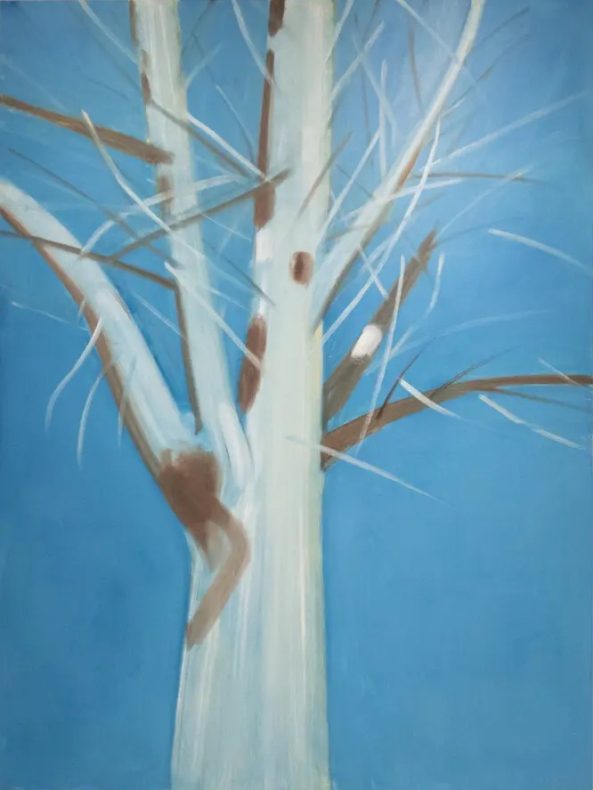
We found ourselves recognizing aspects of trees we’d seen but somehow never called to consciousness…
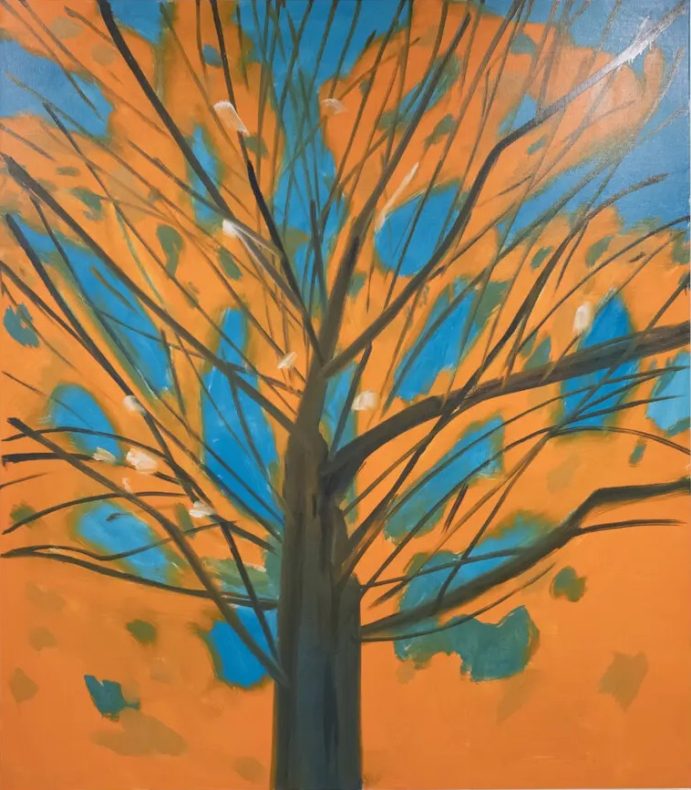
We became aware of the space between trees — the light —that we’ve seen so often but never had words for…
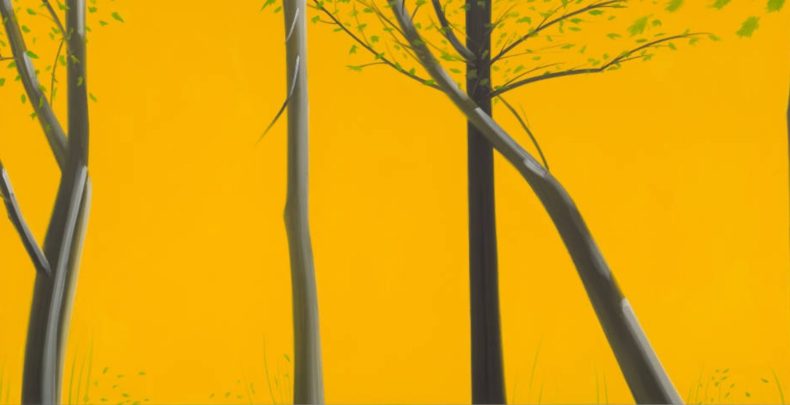
Katz conveyed the immediacy of sunlight reflecting on a lake in that blinding, shimmering way we know but often take for granted…
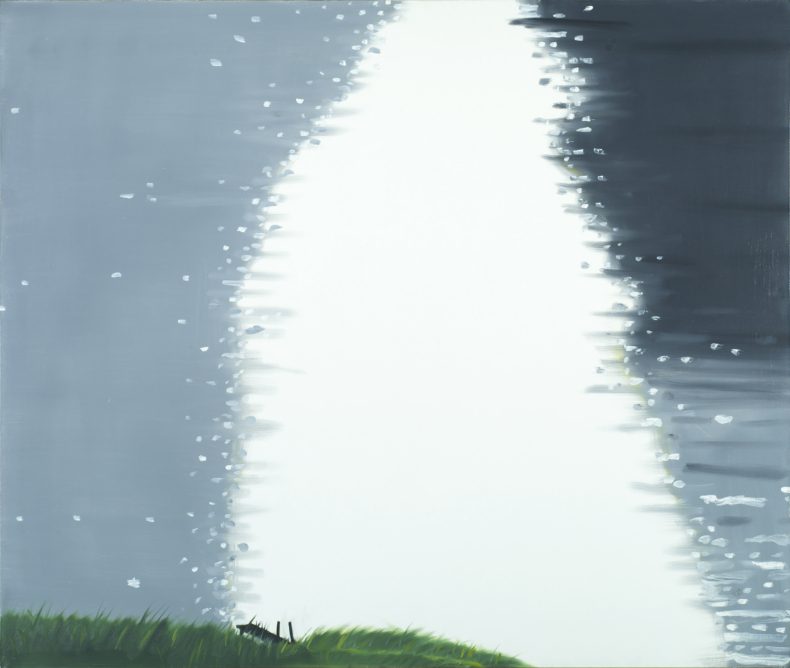
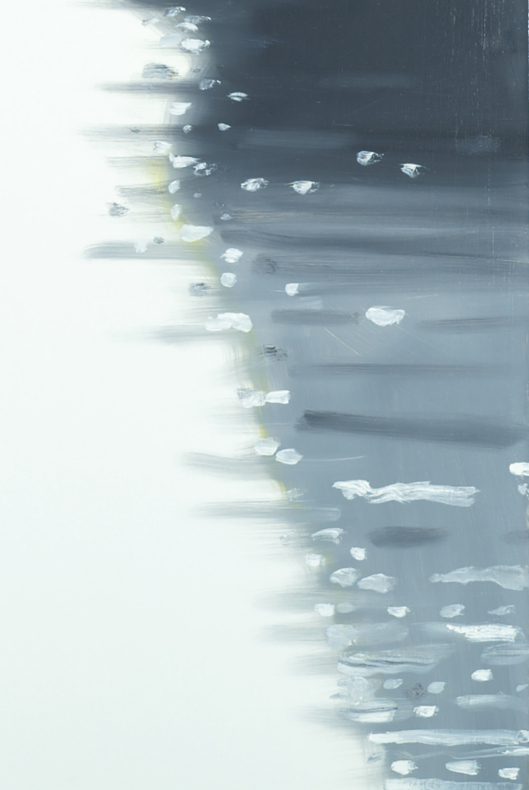
Up close we saw that he achieved this with rough, intensely-expressive dot-like marks. Katz has said that when he paints, “the unconscious comes and does it”.
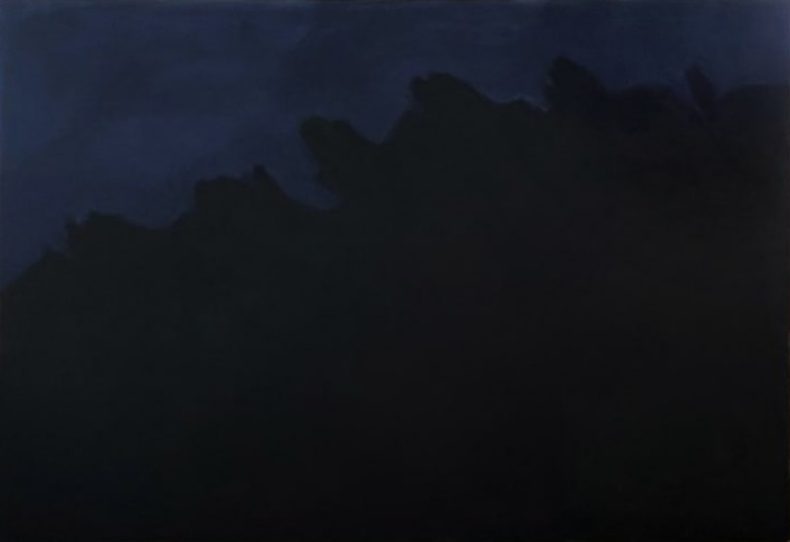
In the wall-size Blue Night, he rendered a deep velvety darkness barely illuminated by the sky’s faint light; it reverberates with the kind of apprehension dark woods can make us feel. The descriptive card that accompanied the painting nailed it: “In its overwhelming scale, the canvas elicits the experience of the sublime, in the classical definition of transporting awe and terror.” Terror, yes.
In the short video at top, Katz described the evolution of his work over decades and the challenge that has fueled him:
I got to the point, Why don’t I paint the sensation of seeing? Descriptive detail disappears. It’s kind of scary, because you don’t know what you’re doing. You’re just feeling your way through it. But you’re making an object that’s different than what you’ve done before. And that’s sort of like what you’re supposed to be doing.
To read more about Alex Katz, check out Robert Smith’s piece about his recent Guggenheim retrospective in the New York Times, as well as Jill Kremenz’ Guest Diary in New York Social (with lots of images of his work).
Related Posts